English
 日本語
日本語 한국어
한국어 Deutsch
Home > Nachrichten > Branchennachrichten > Wie viel Strom verbraucht eine Heizdecke? Watt- und Kostenleitfaden
Inhalt
An einem kalten Winterabend machen Sie es sich mit der Decke auf Ihrem Schoß auf der Couch gemütlich und zögern, bevor Sie zum Stecker greifen. Wie viel Strom wird das tatsächlich verbrauchen? Die meisten Heizdecken verbrauchen zwischen 50 und 200 Watt pro Stunde, was bei typischen Strompreisen etwa 0,01 bis 0,04 US-Dollar kostet. Das macht sie zu einer der wirtschaftlichsten Möglichkeiten, einem Raum Wärme zu verleihen.
Heizdecken für Verbraucher reichen üblicherweise von 50 Watt für eine kleine Heizdecke bis zu 200 Watt für eine große Unterdecke. Die auf dem Produktetikett aufgedruckte Zahl gibt den maximalen Stromverbrauch an, der auftritt, wenn die Decke auf die höchste Heizstufe eingestellt ist.
Hier ist die schnelle Mathematik. Eine 100-Watt-Decke verbraucht acht Stunden lang 0,8 kWh. Bei 0,17 $ pro kWh sind das etwa 14 Cent pro Nacht. Eine 150-Watt-Doppeldecke, die die gleichen acht Stunden läuft, verbraucht 1,2 kWh und kostet etwa 20 Cent.
Nicht alle Heizdecken haben das gleiche Leistungsprofil. Die folgende Tabelle fasst typische Wattbereiche für gängige Kategorien zusammen.
| Deckentyp | Typische Wattzahl | Kosten pro Stunde (bei 0,17 $/kWh) |
|---|---|---|
| Überdecke (traditionelle Heizdecke) | 50-150W | 0,01–0,03 $ |
| Unterbett (Matratzenbezug) | 60-200W | 0,01–0,03 $ |
| Beheizter Wurf | 50-100W | 0,01–0,02 $ |
| Heizdecke für den Außenbereich | 50-120W | 0,01–0,02 $ |
Das obere Ende jedes Bereichs spiegelt eine hohe Heizeinstellung oder einen sehr kalten Raum wider. In der Praxis schalten die meisten Decken ihre Heizelemente ein und aus, um eine Zieltemperatur aufrechtzuerhalten, sodass die durchschnittliche Wattzahl deutlich unter der Spitzenleistung liegt.
Um Ihre eigenen Kosten zu berechnen, benötigen Sie die vier Zahlen der folgenden Formel.
Wenn Sie beispielsweise eine 120-W-Decke acht Stunden lang verwenden, erhalten Sie 960 Wattstunden oder 0,96 kWh. Bei einem Preis von 0,20 $ pro kWh betragen die Kosten pro Nacht 19 Cent. Über einen 30-Tage-Monat sind das insgesamt 5,76 $. Wenn Ihr Energieversorger 0,30 $ pro kWh berechnet, kostet die gleiche Decke 29 Cent pro Nacht und 8,64 $ pro Monat.
Durch den Wechsel von niedrig auf hoch kann die Wattzahl nahezu verdoppelt werden. Bei niedrigem Wert begrenzt der Controller den Strom und die Decke schaltet sich in regelmäßigen Abständen aus. Auf hoher Stufe bleibt das Heizelement über längere Zeiträume unter Strom und der durchschnittliche Verbrauch steigt deutlich an.
In einem kalten Schlafzimmer erkennt der Thermostat in der Decke einen schnelleren Wärmeverlust und fordert mehr Leistung. Ein Raum mit 10 Grad Celsius zwingt die Decke dazu, länger zu arbeiten als ein Raum mit 18 Grad. Das Vorwärmen des Bettes mit einer normalen Bettdecke kann die anfängliche Anwärmphase verkürzen.
Größere Decken nehmen mehr Heizdraht auf, sodass die Spitzenleistung steigt. Aber auch die Dicke spielt eine Rolle. Eine dicke Fleecedecke speichert die Wärme nah an Ihrem Körper, sodass der Thermostat länger im ausgeschalteten Zustand bleibt. Käufer sollten nicht davon ausgehen, dass eine niedrigere Wattzahl immer auch einen geringeren Energieverbrauch bedeutet.
Mit der Zeit können sich Verkabelung und Anschlüsse verschlechtern. Wenn Ihre Decke ausgefranste Kabel, Brandflecken oder einen ungewöhnlichen Geruch aufweist, verwenden Sie sie sofort nicht mehr. Auch ältere Decken können mehr Strom verbrauchen, wenn ihre Isolierung im Inneren kaputt geht.
Der Vergleich der Wattleistung einer Deckenheizung mit der einer Raumheizung zeigt, warum dieses Kleingerät bei energiebewussten Haushalten so beliebt ist. Eine Standard-Raumheizung verbraucht 1.500 Watt. Der achtstündige Betrieb verbraucht 12 kWh und kostet etwa 2,04 $ bei 0,17 $ pro kWh.
| Heizmethode | Typische Wattzahl | Kosten pro Nacht |
|---|---|---|
| Heizdecke | 50-200W | 0,07–0,27 $ |
| Raumheizung | 1.500 W | 2,04 $ |
| Zentralheizung (pro Zimmer) | 2.000–5.000 W | 2,72–6,80 $ |
Wenn Sie eine Heizdecke verwenden, anstatt den Raumthermostat zu verstärken, sparen Sie auch Geld für die Zentralheizung. Wenn Sie den Thermostat während der Verwendung einer Decke um 4 bis 6 Grad absenken, können Sie die Heizkosten im gesamten Haus weiter senken.
Überprüfen Sie vor dem Kauf die Nennleistung im Datenblatt. Ein verantwortungsbewusster Hersteller veröffentlicht neben den Heizeinstellungen und Sicherheitszertifizierungen auch die genaue Leistungsangabe. Achten Sie auf eine einstellbare Temperaturregelung, automatische Abschaltung und einen Überhitzungsschutz. Mit diesen Funktionen können Sie den Energieverbrauch präzise steuern und vermeiden, dass die Decke die ganze Nacht eingeschaltet bleibt.
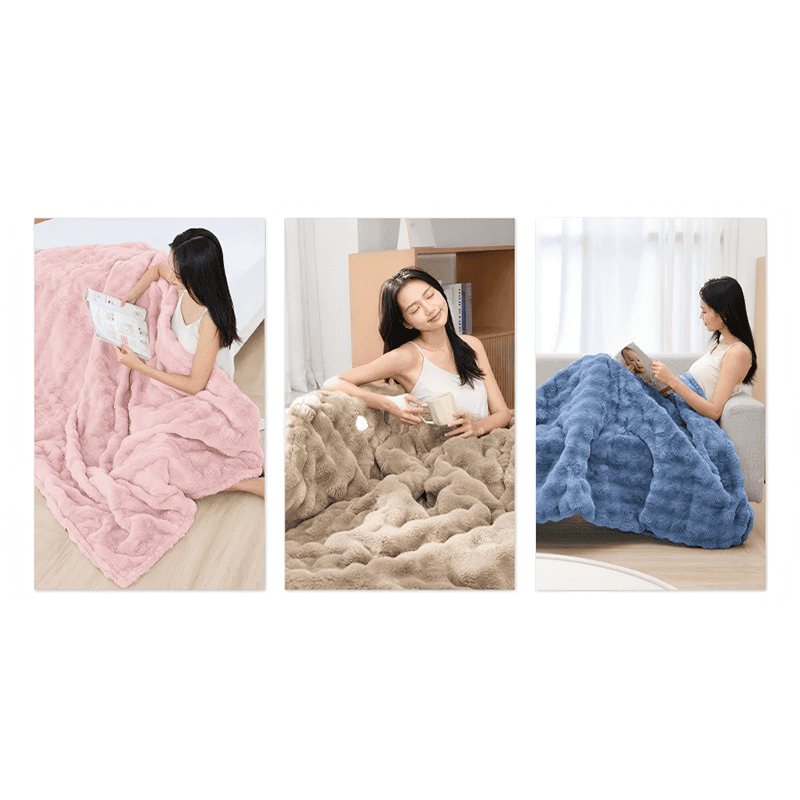 Multifunktionale intelligente Heizdecke mit 6 Heizstufen und Timer Eine weiche Heizdecke aus Mikrofaser und Flanell mit sechs Temperatureinstellungen und vier Timer-Optionen, konzipiert für Sofas, Betten oder gezielte Wärme. Es verfügt über einen Überhitzungsschutz und ist für den Heimgebrauch maschinenwaschbar. Produkt anzeigen →
 Für Outdoor-Einrichtungen wie Camping oder einen Stadionsitz verschiebt sich das Produktprofil. Tragbare Heizdecken sind für niedrigere Wattzahlen konzipiert, da sie auf einer mehrschichtigen Isolierung basieren und möglicherweise mit Akkus betrieben werden. Ihr Stromverbrauch ist vorhersehbarer und liegt in der Regel unter einem Standardmodell für den Heimgebrauch.
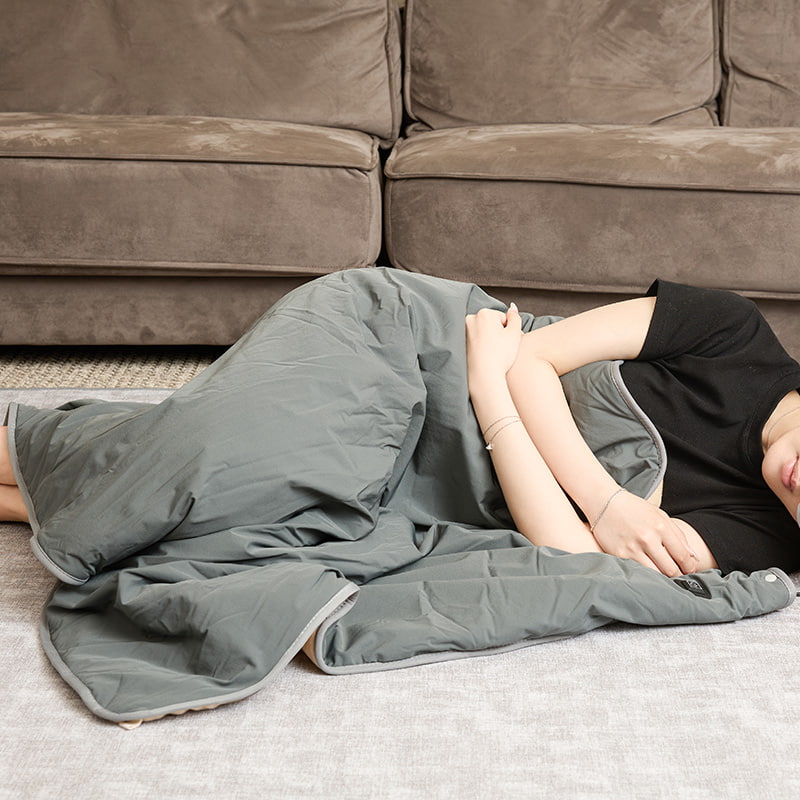 Verschleißfeste Outdoor-Heizdecke mit USB- oder 12-V-Stromversorgung Eine langlebige, wasserabweisende Heizdecke mit drei Heizstufen und tragbarem Druckknopfdesign, erhältlich als USB- oder Autostromversion. Es lässt sich in einer Aufbewahrungstasche zusammenfalten und ist für Reisen im Freien maschinenwaschbar. Produkt anzeigen →
 Bevor Sie eine Großbestellung aufgeben oder ein Modell für Ihr Unternehmen auswählen, erkundigen Sie sich beim Hersteller nach den genauen Wattdaten, der Heizdrahtanordnung und den Controller-Spezifikationen. Unser Technikteam kann Ihnen diese Details liefern und Ihnen auch bei der Auswahl einer Konfiguration helfen, die der Spannung und dem Klima Ihrer Region entspricht. Kontaktieren Sie unser Team direkt für ein Datenblatt.
Wenn Sie die Wattzahl, die Kosten pro kWh und die wenigen Variablen kennen, die die durchschnittliche Leistungsaufnahme verändern, entfällt das Rätselraten. Der Betrieb einer Heizdecke kostet zwischen 1 und 4 Cent pro Stunde und ist damit eines der effizientesten Heizzubehörteile, die Sie besitzen können. Ganz gleich, ob Sie eine Ganzjahresdecke für das Sofa oder eine Version mit geringer Wattzahl für den Außenbereich benötigen, die Spezifikationen lassen sich leicht vergleichen, wenn Sie wissen, worauf Sie achten müssen.